The Ghana Tree

My journey to Ghana. An account of what I see, learn, feel, and experience. My Story and the Stories I come across.

Tuesday, November 9, 2010

Everydays


I am starting to fall into the rhythm of life here in Tamale and am enjoying many of the sights and sounds that I see around town every day.  Tamale is a sprawling town but not crowded and urban but rather suburban—the city simply expanded out into rural communities that still keep their rural lifestyles. I am staying in one such community; Kalpohin village. It is where Walisu grew up and where he started what turned into RUSODEF—The Kalponi Cultural Tour which was focused around a woman’s group that processed Shea butter, pottery making, and traditional weaving.

The morning starts with the morning call to prayer at 5am. There is such a great number of Mosques in the area that the morning call to prayer, like school lessons and singing, takes on a call and response between them with some starting earlier or later than the others. This is also the case with the roosters who attempt to outdo both the other roosters as well as the Mosques, with the roosters taking a much more casual approach to their traditional job with calls being continued into the mid morning—well past sunrise. During this time the rest of the community begins waking up and making morning sounds. My bedroom window looks into a courtyard and the first sounds coming from it are the scratching of a broom across the floor and the metallic clink of charcoal as the first fires are started. After this comes the chattering of children as they get ready for school.

Then as I travel through Tamale and other areas a host of sights meet my eyes. Hundreds of uniformed school children heading to class—some on foot, some piled on to bicycles and motorbikes and others stuffed into taxis with only their heads visible. The groups of young Muslim girls riding to school wearing their long headscarf’s and sitting sidesaddle on the back of their friend’s bicycles is a very stunning sight. And as one travels farther outside you battle against an oncoming current of students and workers flooding into town. But you also see women heading out into the rural communities with bowls balanced on their heads and piled high with soap, toothpaste, flip-flops, and other household items to sell in the villages. On one outing I passed through a community where young boys were driving donkey carts loaded down with barrels of water or else piled high with their friends. And if you are lucky enough to travel into the country side on a Sunday you will be able to witness the weekly ritual of laundry—where hillsides and trees next to water sources are brightly decorated in the colorful clothing of the washers, and while the women are busy with their washing the children amuse themselves in the water.

And all of this is set against the phenomenon of Africa time where 9:30am means 11:00am or noon. This attitude towards time is also reflected in greetings; there are different greetings for the morning afternoon and evening, and the transition is greatly blurred which adds a rather whimsical element to greetings.

There is also one street in Central Tamale between one of the main Mosques and the market where children lead old blind women through the traffic begging for money which the children collect in a bowl and then hand over to the women who tuck it into the folds of their clothing as they shuffle to the next car or motorbike. The first time I witnessed this scene it caused me to take a step back and wonder—for one there are few beggars on the street and then in Africa, where it often seems that you are only working to get the lucky few a better life, to witness a blind beggar who’s only support comes from a small child one understands the huge amount of work that needs to take place. When people ask the question “Can the whole world live like America or Europe?” I don’t think about cars, T.V. or fast food but rather education for the blind or special education programs in school—one of the other saddening sights is that of a child with obvious learning disabilities either out of school wandering the streets or in a classroom completely lost and ignored by the teacher—only seen as a hindrance to the other children. There is a whole side of life that we take for granted that isn’t even imagined by most Ghanaians. When it is a struggle to provide even basic education and care, those who are worse off are often left by the wayside. In a country full of signs advertising a multitude of education and development projects the only one I have seen related to the disabled is a billboard in Tamale urging people not to beat “Street Retards.”

Monday, November 8, 2010

Peppers and Kola Nuts


The kids at Kpawumo Childrens Home
 Fatima the ringleader. This picture perfectly describes her. I have one of most of the kids and it is the same--a picture of their personality.
 Repairing the wall at the school.
 Ghanaian Cowboys
 Meeting Walisu's great Uncle in his grandfather's village.
 The village is a chili producing community and they dry the harvests in their compounds.
 Soybean harvest.
 The village, N'bana'ayili. They also grow tobacco.
 This crew followed me around.
 Learning to weave a traditional sleeping mat.

 More Chilies.
 Presenting Kola Nuts to the Chief of Taha, a RUSODEF community.
 Meeting with the elders of Taha. They are asking for development projects that focus on and help their wives and children.
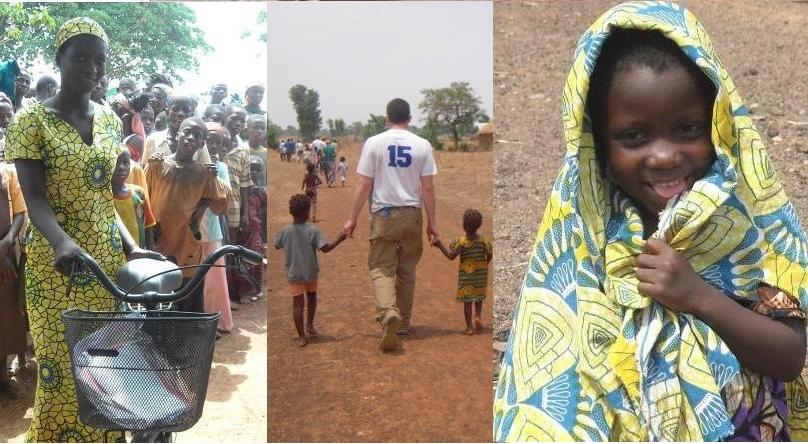
 My new bicycle.
Walisu's Grandmother. She is part of a woman's coop that makes the traditional shawls. She is a spinner and spins raw cotton into thread by hand.

Saturday, November 6, 2010

Grandma's

Yesterday I escaped Walisu and was afforded and easy day in the shade and even some AC. I met up with Nii and visited an organization called Girls Growth and Development (GIGDEV). This is a program that takes in underprivileged girls—many single mothers or street children—and gives them basic education and care along with vocational training in sewing, cloth making, and hair dressing and business and computer training. I visited them on my previous trip to Ghana and was very impressed with their work. It was started by a local woman, sometimes known as Grandma, out of her house with just a few girls and little supplies. Now it has over one hundred girls in three centers. I was there to help them design a blog to act as a temporary website because they are have problems accessing theirs—the person who designed it will not give them access and is always demanding more money. The blog is not quite finished but here is the address: www.gigdev.blogspot.com

When I arrived the center was a hive of activity and color with girls in green and yellow uniforms were sewing on old Singer machines with brightly colored hand dyed cloth, girls practicing hair styling on each other, and a troop of small children playing while on break from Kiddie Care—the preschool where many of the girl’s children attend. Most of the compounds attention was not focused on their tasks at hand because in the center yard a group of older girls were accompanied by two drummers and were enacting an intricate dance and chant. These girls were practicing for their graduation ceremony on November 27th. This ceremony comes after two years of hard work and the girls are also awarded a sewing machine and other supplies to go out into rural communities and set up shops. I have been invited to attend and am very excited.

Tamale seemed to be overrun with white people as well; well I saw twenty and that seemed like a lot. I put this down for a couple of reasons: 1. I visited the fastest internet cafĂ© which appears to be the hangout—good discovery for uploading pictures though! 2. It was Friday and Tamale is the staging area for a trip to Mole National Park and I suspect a good number were heading there. As I rode along on the back of the scooter and saw groups of white people walking along I got a weird feeling, almost like being part of an exclusive club or witnessing wolves among sheep. The second of which seemed a little unfounded because at the three that I met were either volunteers or representatives of donor organization working with GIGDEV.

As night fell I took a walk with Walisu and we discussed more about how I would deliver my first aid training—hopefully my drawing skills improve because I have a long week of poster making ahead of me. Dusk in northern Ghana is an interesting time. The sunset is not glorious but rather understated and seems all the more beautiful because of it. As the sun sinks into the sky its last light mingles with the days dust settling and the smoke from cooking fires rising. This creates a type of hazy dusks that bats emerge into and bicycle lights and motorbike headlights peer through.  A very agreeable time of the day.

Friday, November 5, 2010

The Rural Life


While the rural life appears to be much better than the chaos of the city, especially when coming from a city such as Accra, it is important to remember that the rural communities battle against their own setbacks when it comes to leading a healthy and fulfilling life. While the communities I am visiting are set against a stunning landscape and live a picturesque pastoral life the truth is that there has been little development—they are essentially living as they have been for hundreds of years. The biggest obstacle they face is access to need resources such as basic health care and clean drinking water.

There is a government health clinic in the area but it has been closed down. In the case of a medical emergency a taxi would have to be called and this could take up to several hours. Mothers are still dying from complications during childbirth. It is also hard for the community members to access the government “free” health care because there is a fee of about $10 at registration which pays for the photo ID.

The water situation is very troubling and while there have been some improvements there has still not been any drastic improvement. There are a few wells and water catchment systems but these are limited by the dry season which causes these sources to run dry. The residents then turn to the dams which store water and slowly goes down and ultimately gets dirtier and dirtier. One big improvement that Walisu is very proud of is the eradication of Guinea Worm from the area. This was RUSODEF’s first project and was accomplished by simply providing households with cloth water filters on a monthly basis.

And while it is hard to resist the image of a young flute playing boy grazing his herd through a village and its tall grass when looked at closely it presents a host of problems--from contaminated drinking water to the young boy working and not being in school. It is important not to romanticize these scenarios and one must remember that development must happen and that it is a long road.

I spent the day hanging out with a ragtag bunch of orphans after school was let out. In Africa there are rarely true orphans with some extended family member always being close but this group was brought together because they had lost parents and their other family members could not care for them. They live together in a home and attend the village school. They are anywhere from toddler age to about 10 or 12. And like orphans everywhere they are lacking in every aspect except companionship.  There is a British volunteer working there, she has been there for two months and is leaving next week. She had left for the afternoon and I quickly saw her hard won bathing results disappear into the dirt. They were interested in my watch so I set about teaching them to read a clock—I had little success so with every group of school children I have met in Africa the situation soon broke down into a singing demonstration with snatches of songs being shouted and recited—usually in lining form with an older student leading.

I am also starting to work on my first projects. This involves getting together a first aid teaching curriculum. I am planning to focus on basic sanitation and first aid care, once again with a focus on cleanliness. This education will take place during my village stays—I will be staying in each of the six rural communities for about a week. During this time I will also repair bicycles and teach some basic bicycle maintenance in addition to experiencing the villages’ daily life.

 Kindergarten Class


Wednesday, November 3, 2010

Boulevards and Markets


The first night in Tamale ended with a tour of the town. At first glance it is a town that closes down for the night but when you look closer you find pockets of activity collected around a favorite spot. The night started just across the street from the house. The entrance to a tomato patch is the nightly hangout for Sadat, Walisu’s younger brother and his group of friends. Their nightly activities revolve around the drinking of a strong Chinese herbal tea called Atiya. It is drunk with sugar out of shot glasses while it is still boiling hot, so the drinker has to suck in small amounts with a large amount of air. To the passer by this sounds extremely odd. After that the next stop was a barbershop owned by a friend where we played cards—a simple game of trump that with a large amount of beginners luck I was able to well. The next stop was across town at a spot (bar) owned by another friend. Outside of the bar was a young girl who was sick out of loneliness for her father who was travelling and when Umasi the owner of the bar called the girl’s father so she could talk to him her only response was to nod her head.

Tamale is a dark city with many areas unlit but it is a wholesome darkness that simply expunges sleepiness and nothing sinister. This feeling is felt most when passing by the areas of the town that are still forested—there are also long sections of central boulevards shaded by old trees.  There are still vendors selling food by the light of a small lamp but they are fewer and clustered closely together at junctions and street corners--this gives the city a much more intimate and friendly feel; except for the melon sellers who appear on the side of the street along dark sections sitting among piles of watermelons. My favorites are the orange sellers because as you drive along you catch the scent of citrus as the peel the zest off of their fruits. Eating the oranges is a most rewarding experience; the top is cut off and you first suck out the juice before tearing it open and eating the rest. Deliciously refreshing on a hot afternoon.
Today involved a trip to the central market to buy groceries. Once again I plunged into a tightly packed maze of people. This was largely a food market and the most common items were tomatoes and peppers, onions, rice and beans, and fish. There was also a large meat sections where huge chunks of beef were for sale next to whole goats with the heads hanging along side. These were the items we purchased, minus the meat—no whole goats yet, maybe for Thanksgiving. And as I write this I am sorting out bad beans and Walisu is dicing the tomatoes, peppers, and onions and then grinding them together with the local pestle, a solid wooden tool in the shape of an hourglass.

However the day started out badly with the discovery that Walisu’s bike had been stolen, the Great Hadjin was gone. This was huge news for the community—theft being very rare—and the news spread around with neighbors and friends arriving to mull the matter over. If it does not turn up we will have to think of something because it is his lifeline to the more distant communities. Sadat has a scooter but it is not well suited to the rutted roads and water crossings.

The morning's activities started with a visit to the preschool down the street with a bag full of school supplies. By the time I arrived a couple children had asked if the white man was coming back and one father upon dropping his son off asked about me saying his son had said that they had “received a white person.” To help the kids remember my name they suggest I teach them a song to go along with it. This caught me off guard to say the least but I was able to adapt “The Wheels on the Bus” to “The Wheels on the Bicycle” and after several renditions by me a few of the kids were catching on and I left with the promise that they would work on it. So I now hope to be greeted on the streets with “Mr. Jeremy” and “The Wheels on the Bicycle go round and round, round and round, the wheels on the bicycle go round and round all the way to school.”

The majority of today was dedicated to buying the supplies needed to repair the large crakes in the school. A mason surveyed the damage and reported that 3 bags of cement, 12 cinder blocks, and 2 barrels of sand were needed to complete the repairs. So the first item on the agenda for Walisu and I was to track down tricycle to pick up and convey the materials to the school. The first one we found, the front of a motorcycle mated to a small truck bed said it was not powerful enough so we were sent to find a more powerful one. The one that finally arrived was of Chinese make, looked very sturdy and appeared to use an engine pulled out of a 19th century textile mill. Next came a scavenger hunt across Tamale in search of the goods; involving waiting for afternoon prayers to end before buying the concrete and unearthing a pile of sand hidden beneath rocks and branches. Then it was out to the school. Both the tricycle and Sadat’s scooter made it across the water crossing but the tricycle did become stuck once in the soft ground. By the end of it all we were both exhausted.

I also bought a 3G modem so I will be able to consistently update the blog.

Tuesday, November 2, 2010

Plantain Chips and Guinea Fowl Eggs


My last day in Accra was bittersweet—I was looking forward to leaving the busy city behind and was anxious to arrive in Tamale where I will be working but I was also going to miss the people I had befriended. I started my morning by fetching water with Rita and then walking to school with the girls and visiting their classes. After that Mama Sheila cooked a feast for me over a charcoal fire. It started out with French fries and then proceeded to spaghetti with a delicious spicy sauce; she then added a fried egg and ended it with a pile of plantain chips. After that it was off to the bus station.

The bus station was a confusion of colors and packages—people were packing everything from TVs to mini fridges. And I was glad to see that an excess of luggage was not an uncommon thing, although most items were packed in grain sacks and not bright pink bags. The bus was nice and new but left late and was then put to stop by a flooded road which resulted in a two hour traffic jam and a mile of mud and water. The road was under construction and was being turned into a four lane highway—the current situation on the road was about 6 lanes of traffic—one each way on a finished section of the road in the middle and then two lanes of traffic on both shoulders; this all merged together at the lowest water point but still remained at about 6 lanes of busses, TroTros, trucks, and cars. By this time the sun had set on Accra and I settled in for a fourteen and a half hour bus ride over extremely potholed roads.

Tamale is a town where motorcycles outnumber cars and bicycles outnumber motorcycles. It is also a majority Muslim area and I saw many veiled women riding or sitting side saddle on the back of bicycles. We arrived just as the sun was rising and I was greeted by green fields of corn and rice. A stark difference from last time—what was dry and burning last April is now lush and green. The unloading was just as chaotic as the loading but I soon met up with Walisu, my contact in Tamale. After a quick breakfast at Walisu’s house—and my base for the next few months—we headed out to visit the villages in the RUSODEF community (RUSODEF stands for Rural Social Development Foundation) where I will be working and staying. They are a collection of villages on the outskirts of Tamale. Their distance is anywhere from 10-30 minutes by motorbike on winding red dirt roads.

First we visited a kindergarten that receives support from RUSODEF; it is a short walk from where I am staying and I look forward to visiting it often. It has two classes and its teachers are two young women who volunteer their time. In the first class I was given a counting demonstration to 50 and the second class I listened in as they worked on spelling and then the students introduced themselves to me with their names, age, and the reciting of a poem.

 It had been a good rainy season and the rice paddies in the low areas are overflowing and the corn is standing tall on the tops of the hills. The horizon is also dotted with a variety of trees with the Baobab trees dominating the smaller kola nut trees and the shady mangos. This stunning landscape is dotted with villages of thatched roofs and Mosques whose colorful minarets thrust into the sky. However, all the rain has not been good for the roads—Walisu expertly negotiated a water crossing on the bike, or for some of the buildings—my first project will be repairing cracks in the wall of the school they built last year.  We visited each of the communities and met with either the community focal person for ROSUDEF, the women’s group leader, or the traditional chief. This all involved a complicated series of greetings which I am still getting the hang of. Everyone was very excited for my stay. The two chiefs I met with were especially excited and I left with a bag of guinea fowl eggs from one chief.

Walisu was also keen on me acting as driver, so I was soon driving along rutted dirt roads avoiding goats, cattle, school children, and bicycles. The motor bike is a Great Haojin from China with a backwards gear box.  I will be able to use the motorbike but I will also be getting a bicycle to travel to and in between the villages.

Walisu has a busy schedule planned for me and I am excited to get working and am excited to spend time staying and working in the villages, the fields, and the schools. The internet I am currently using is dreadfully slow so updates might be picture free for a while but I will try my best.

I have found the true Green Hills of Africa.